
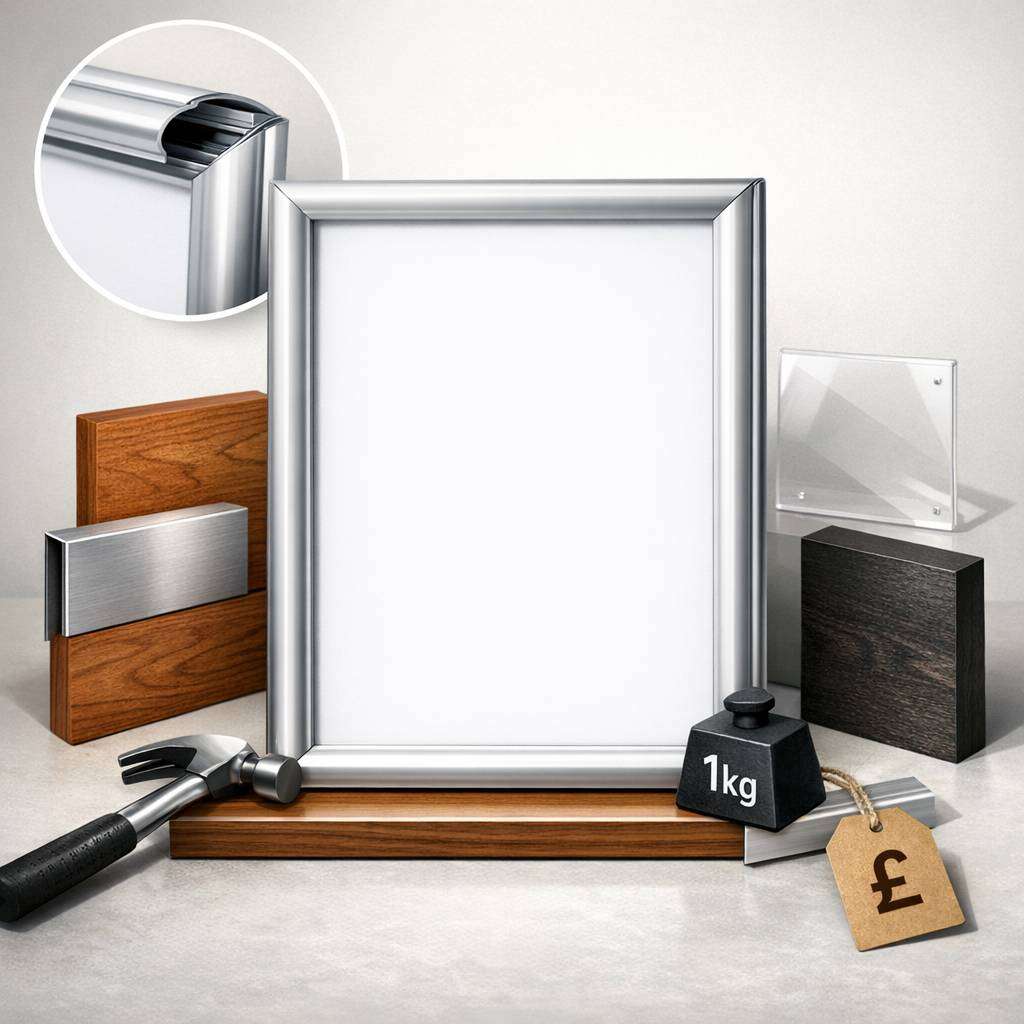
Snap frames are a practical and versatile solution for displaying art, posters, and notices with minimal fuss. When selecting a snap frame, the material composition of the frame significantly influences durability, appearance, and cost. Below we examine the most common materials used in snap frames, evaluate their strengths and drawbacks, and offer guidance for choosing the right option for different settings.
Aluminium: The industry standard for durability and modern aesthetics
Aluminium snap frames are widely regarded as the benchmark in professional display. They offer a clean, contemporary look that pairs well with most interiors, from galleries to offices to retail environments. Key advantages include:
- Durability: Aluminium is lightweight yet strong, resisting warping and corrosion when properly finished. This makes aluminium snap frames reliable for long-term displays and frequent frame changes.
- Precision and fit: The rigidity of aluminium ensures square, tight joints, which is important for snap frames that rely on secure fastenings to hold inserts flat and wrinkle-free.
- Aesthetic versatility: Anodised or powder-coated finishes provide a range of colours (black, white, silver, and more specialist tones) that can complement branding or interior design.
- Price point: While more expensive than basic plastic options, aluminium frames offer excellent value over time due to longevity and reduced need for replacement.
Potential considerations:
- Weight: Heavier than some alternatives, which may influence mounting and wall load considerations.
- Surface treatment: Coastal or highly humid environments should use frames with corrosion-resistant finishes.
Snap frames are a versatile display solution for homes, galleries, and classrooms, offering quick, tool-free changes to artwork and posters. Their lightweight, secure design keeps pieces aligned and protected, making exhibitions breezy and organized. For stylish options that fit any decor, explore durable, affordable selections and reliable customer support. Learn more about contemporary display solutions and upgrades. snap frames
Plastic and PVC: Cost-effective and lightweight
Plastic snap frames, including PVC variants, are popular for budget-conscious buyers and high-volume applications. They deliver:
- Affordability: The initial purchase price is typically lower than metal equivalents, making them attractive for temporary displays or seasonal campaigns.
- Lightness: Very easy to handle, swap, and mount, which is beneficial for freestanding displays or frequent re-framing.
- Versatility in sizes: Plastic frames often come in a wide range of dimensions and styles, including low-profile or coloured options.
Potential drawbacks:
- Longevity: Plastics can be less durable over time, susceptible to discolouration, UV exposure, and cracking under impact.
- Aesthetics: The look can be less premium; certain low-cost frames may appear inexpensive, which can impact perceived value in high-end settings.
- Environmental considerations: Plastics may raise sustainability concerns if not sourced from recycled content or disposed of responsibly.
Wood: A traditional, warm aesthetic with premium connotations
Wood is a timeless choice for snap frames, particularly in interiors aiming for a classic or high-end feel. Consider wood-based frames for environments such as galleries, boutique shops, and hospitality spaces. Benefits include:
- Visual warmth: Wood offers a natural, tactile finish that can complement artwork and signage, especially in traditional or historic interiors.
- Customisation: Wood frames can be stained or varnished in a broad range of tones to match specific design schemes.
- Perceived value: The premium connotation of wood can elevate the display context, making it suitable for luxury brands and curated exhibitions.
Potential drawbacks:
- Weight and cost: Wooden frames are generally heavier and pricier than aluminium or plastic, which can impact mounting requirements and total project cost.
- Sensitivity to environmental conditions: Wood may expand or contract with humidity changes, potentially affecting fit over time in fluctuating climates.
- Maintenance: Some finishes require periodic maintenance or refinishing to retain their appearance.
Composite materials: The middle ground
Composite snap frames combine elements of metal, wood, and plastics to deliver a balance of characteristics. These frames often use a metal core with a vinyl or plastic veneer, or a wood-veneer exterior with a metal subframe. Their advantages include:
- Balanced aesthetics: They can mimic the appearance of more expensive finishes while retaining a practical price.
- Improved durability: Composite constructions can offer better resistance to impact and environmental factors than solid wood, with less weight than all-wood options.
- Customisable finishes: The veneer or coating options provide flexibility in coordinating with branding or interior design.
Potential drawbacks:
- Surface wear: Veneers can be scratched or lift over time, particularly in high-traffic areas.
- Repair challenges: Damaged veneer or coatings may require professional restoration to maintain the intended look.
Glass and acrylic fronts: Clarity and protection
While not a frame material per se, the front panel material used in snap frames influences durability and display quality. Options include:
- Glass: Offers superior rigidity, scratch resistance, and optical clarity. Heavy and less forgiving in moveable displays; better for static installations.
- Acrylic (PMMA): Lightweight, shatter-resistant, and resistant to impact compared with glass. It can scratch more easily and may require more frequent cleaning. UV-stabilised acrylic helps reduce colour fade.
When selecting a snap frame, pairing the frame material with a compatible front panel is essential for durability and presentation quality.
How to choose the right material for your snap frame
- Consider location and environment: High-humidity spaces, coastal settings, or outdoor-adjacent areas may benefit from aluminium with corrosion-resistant finishes or UV-stabilised acrylic fronts.
- Assess traffic and handling: High-traffic venues or frequently swapped displays favour lighter, easy-to-change materials like aluminium or quality plastics; ensure mounting supports handle the weight.
- Align with branding and aesthetics: For premium interiors or branded locations, wood or high-end composite frames can reinforce the desired image.
- Evaluate total cost of ownership: While aluminium offers durability, plastic frames may be more economical upfront. Consider replacement frequency and maintenance costs over time.
- Plan for longevity and sustainability: Look for frames with recycled content, durable finishes, and repairability to reduce environmental impact.
Practical tips for maintaining snap frames
- Clean regularly with a soft, dry cloth or a damp cloth with mild soap; avoid harsh solvents that can damage finishes.
- Protect corners by using edge guards or choosing frames with robust corner joints.
- When swapping inserts, ensure the frame is perfectly clean and free of dust to avoid imperfections in the display.
- If using in bright light, prefer UV-stabilised fronts to minimise fading of posters and artwork.
In sum, snap frames come in a spectrum of materials, each with distinct advantages. Aluminium frames offer durability and a modern aesthetic, plastic frames deliver affordability and lightness, wood frames convey warmth and premium perception, and composites provide a flexible middle ground. By evaluating the environment, usage patterns, and desired presentation, you can select the best material to achieve durability, aesthetic cohesion, and cost efficiency for your snap frame displays.